
Social Skills Groups vs 1:1 ABA Therapy: Which Is Better for Your Child?
When it comes to helping children with autism develop strong communication, emotional, and social skills, parents often face one big question:
Should my child join a social skills group or continue with one-on-one (1:1) ABA therapy?
Both approaches can be incredibly effective—but each serves a unique purpose. Understanding the difference can help you make the best decision for your child’s current stage of development.
What Are Social Skills Groups?
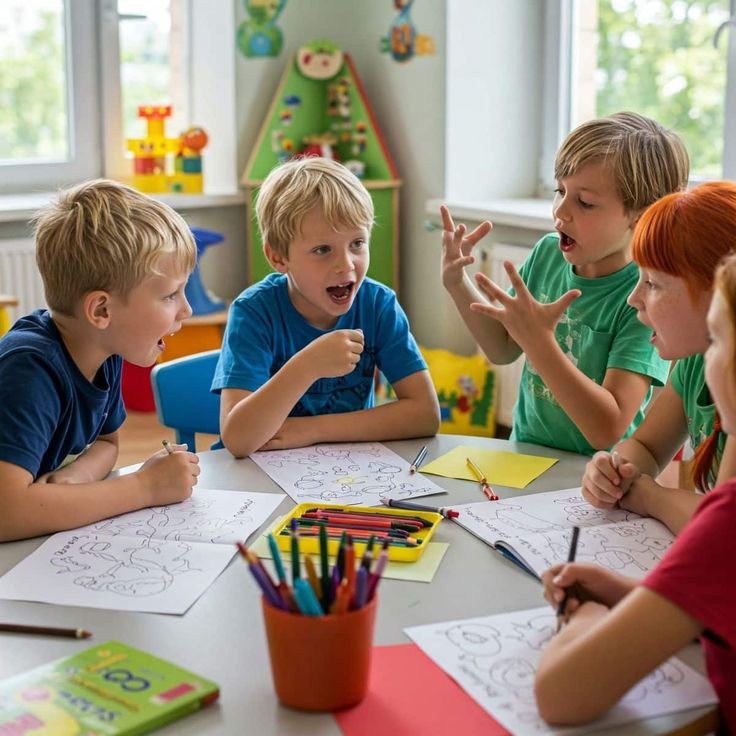
Social skills groups are small, structured sessions where children learn through interaction with peers. Led by experienced therapists, these groups focus on:
Taking turns and sharing
Understanding body language and tone of voice
Managing emotions
Building friendships
Solving social challenges in real time
Children learn by observing, practicing, and receiving feedback in a safe environment. It’s a hands-on way to prepare for real-world social situations—like playing at school, joining group activities, or having conversations with friends.
Example: A therapist might role-play a playground scenario where children practice asking to join a game or resolving a disagreement.
What Is 1:1 ABA Therapy?
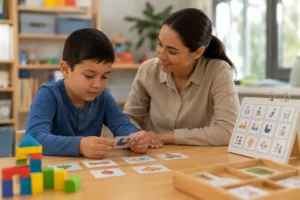
One-on-one ABA therapy provides individualized attention. Each session is tailored to the child’s unique goals—whether it’s improving behavior, communication, or daily living skills.
Therapists can:
Work at the child’s own pace
Use personalized reinforcement strategies
Focus on specific skill areas (e.g., language, self-regulation)
Track progress closely and adjust techniques as needed
Because every child learns differently, 1:1 ABA therapy ensures that instruction is consistent, clear, and based on what works best for that child.
Example: A therapist might teach eye contact, turn-taking, or following directions before moving into group practice later on.
Key Differences Between Group and 1:1 Therapy

| Aspect | Social Skills Groups | 1:1 ABA Therapy |
|---|---|---|
| Focus | Peer interaction, communication, teamwork | Personalized behavior and skill development |
| Setting | Small group (3–6 children) | One-on-one with therapist |
| Best For | Practicing learned skills socially | Learning foundational behaviors and routines |
| Feedback Style | Peer modeling and therapist guidance | Direct and individualized feedback |
| Goal | Real-world social readiness | Targeted developmental growth |
Who Benefits from Social Skills Groups?
Social skills groups are ideal for children who:
Already have basic communication skills
Can follow simple directions
Are ready to learn from peers
Need practice applying learned behaviors in real settings
These groups help children build confidence, friendship, and emotional understanding—skills that one-on-one therapy alone may not fully develop.
Parents often notice that children who attend social groups:
Make eye contact more often
Start conversations with peers
Manage frustration better during play
Show more empathy and awareness
Who Benefits from 1:1 ABA Therapy?
Individual ABA therapy is perfect for children who:
Are new to therapy
Need extra support with attention or communication
Have difficulty engaging in group settings
Require a structured, low-distraction environment
In 1:1 sessions, therapists can focus deeply on foundational skills before transitioning the child into more social environments.
It’s often the first step toward group learning.
How to Choose What’s Right for Your Child
The best approach often isn’t “either-or”—it’s both at the right time.
A child may begin with 1:1 therapy to build essential communication and behavioral skills, and later join a social skills group to practice those skills with peers.
At AdTherapy, our clinical team carefully assesses each child’s needs and progress to create a customized plan that blends individualized learning with social development opportunities.
Final Thoughts
Both social skills groups and 1:1 ABA therapy offer unique benefits.
While one-on-one sessions focus on building foundational skills, group sessions help children apply and refine those skills socially.
Choosing the right path depends on your child’s readiness, comfort level, and developmental goals—but remember, it’s not a race. Every child learns and grows at their own pace.
At AdTherapy, we’re here to support your child’s journey—every step of the way.
Contact us today to discuss your child’s goals and find the right therapy plan for their success.
FAQs
Does ABA work on social skills?
The ABA is a therapeutic program that can enhance social, communicative, and learning skills through positive reinforcement and individualized instruction.
What is better than ABA therapy?
1. Cognitive Behavior Therapy (CBT) CBT is a communicative therapy aimed at helping people with various disorders, including autism, reduce their symptoms by altering the way they make decisions, carry out tasks, and interact with other people.
Which therapy helps with social skills?
Cognitive Behavioral Therapy (CBT) offers ways to build these skills. It helps people notice and change negative thoughts that cause social anxiety. Through role-playing and exposure therapy, clients can practice their interpersonal skills in a safe environment.