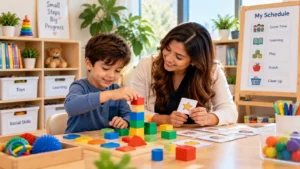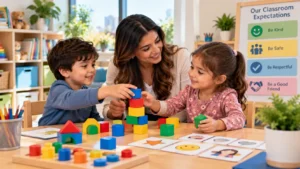
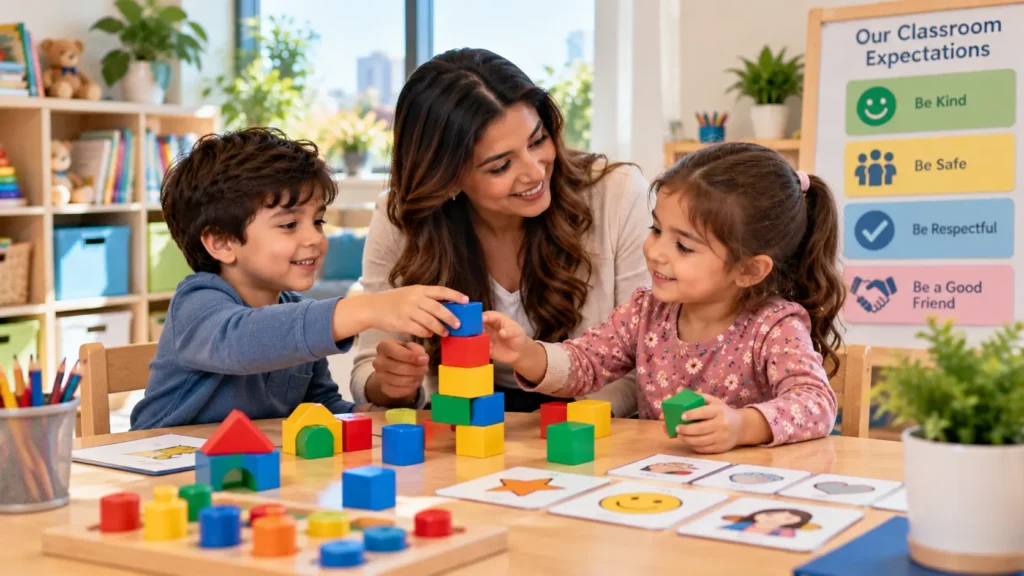
A child stands by the classroom door, holding a backpack and looking worried. The morning routine has changed, and the usual instructions are not helping. Instead of repeating “Hurry up,” an educator points to a simple picture schedule, offers a choice, and praises the child for taking the next step. It is a small moment, but it captures the spirit of PBIS: teach useful skills, make expectations clear, and respond with support.
01 What Does PBIS Stand For?
PBIS stands for Positive Behavioral Interventions and Supports. It is an evidence-based framework that schools and early childhood programs use to build positive, predictable learning environments. Rather than waiting for difficulties and responding only with consequences, staff teach expectations, notice progress, and adjust support using information about what students need.
PBIS is not a single therapy, reward chart, or ready-made curriculum. It is a coordinated approach that brings together staff practices, family perspectives, and regular progress checks. It can help many children, including autistic children, but support must remain individualized and respectful of each child’s communication and sensory needs.
02 How Do the Three PBIS Tiers Work?
PBIS organizes support into three tiers. The tiers describe the intensity of support, not a child’s ability or worth.
Tier 1 — Universal support: Everyone benefits from a few positively stated expectations, visual reminders, predictable transitions, and educators who model the skills they want to see. For example, a class might practise “walking feet” before moving to the playground.
Tier 2 — Targeted support: Some children benefit from extra practice in a small group, more frequent check-ins, or a personalized goal. A child who struggles to join play may practise asking a peer to participate with an adult nearby.
Tier 3 — Individualized support: A smaller number of children need more intensive planning informed by assessment, family input, and ongoing review. The team may examine what happens before a behaviour, what the child may be communicating, and which environmental changes would help.
03 PBIS Examples in Everyday Routines
Imagine the same child at three points in the day. During arrival, a visual schedule shows where to put their belongings. At circle time, the educator offers a quieter seat and a short movement break. Before outdoor play, the group rehearses the transition together. None of these steps requires a child to hide distress or force eye contact. The goal is access, participation, and a clearer way to ask for help.
A useful PBIS response also looks beyond the visible behaviour. If a child leaves an activity repeatedly, the team can check whether the task is confusing, the room is loud, or the child needs a communication option. Teaching “break please” may be more helpful than insisting they remain seated.
04 How PBIS and ABA Therapy Relate
PBIS and Applied Behaviour Analysis (ABA) share an interest in understanding behaviour and teaching meaningful skills, but they are not interchangeable. PBIS typically describes a school- or program-wide framework. Individualized ABA services focus on goals selected with a child and family, and on reviewing progress over time.
Families who want strategies carried into familiar routines can explore ABA therapy at home in Canada, where learning can be connected to communication, play, and everyday independence.
Educators may also coordinate with families and support providers when a child needs more individualized help during group activities. ABA therapy at daycare in Canada can focus on participation in natural settings while respecting the daycare team’s routines.
05 What Are the Benefits of PBIS?
When thoughtfully implemented, PBIS can make expectations easier to understand, support consistent responses from adults, and reduce avoidable barriers to learning. Its emphasis on prevention and teaching is often more constructive than repeated correction. Schools may also use data to identify which supports are working and which should change.
Benefits are not automatic, however. A sticker chart without meaningful instruction is not a complete PBIS system. Positive support should recognize effort, honour individual preferences, and avoid rewarding compliance at the expense of comfort, autonomy, or communication.
06 How Parents Can Put These Ideas to Work
Start with one difficult routine, such as getting ready to leave home. Ask what makes it hard, describe the next step clearly, and offer a choice or visual cue. Acknowledge the child’s attempt to communicate, even when the routine does not go perfectly. Share what works with educators so the child does not face conflicting expectations across settings.
For families seeking individualized autism support locally, ABA therapy in Mississauga may help connect home priorities with practical, family-led goals. A qualified clinician can discuss whether an assessment or structured plan is appropriate.
07 Frequently Asked Questions
1. Is PBIS only for autistic children?
No. PBIS is designed to support all students. Individualized adaptations may help autistic children and others who need additional communication, sensory, or learning support.
2. Is PBIS the same as ABA therapy?
No. PBIS is commonly a school-wide support framework; ABA therapy is an individualized service approach. Some evidence-based practices may overlap, but their scope and delivery differ.
3. Can parents use PBIS ideas at home?
Yes. Clear routines, teaching replacement skills, offering choices, and acknowledging progress can help at home. Adapt strategies to the child rather than copying a classroom plan unchanged.
The Takeaway
PBIS stands for Positive Behavioral Interventions and Supports. At its best, it helps adults ask a better question: “What skill or support does this child need next?” Consistent routines, respectful communication, and individualized adjustments can turn stressful moments into opportunities for connection and learning.